H2, H3 or H4 Treated Pine: Which One Does Your Job Need?
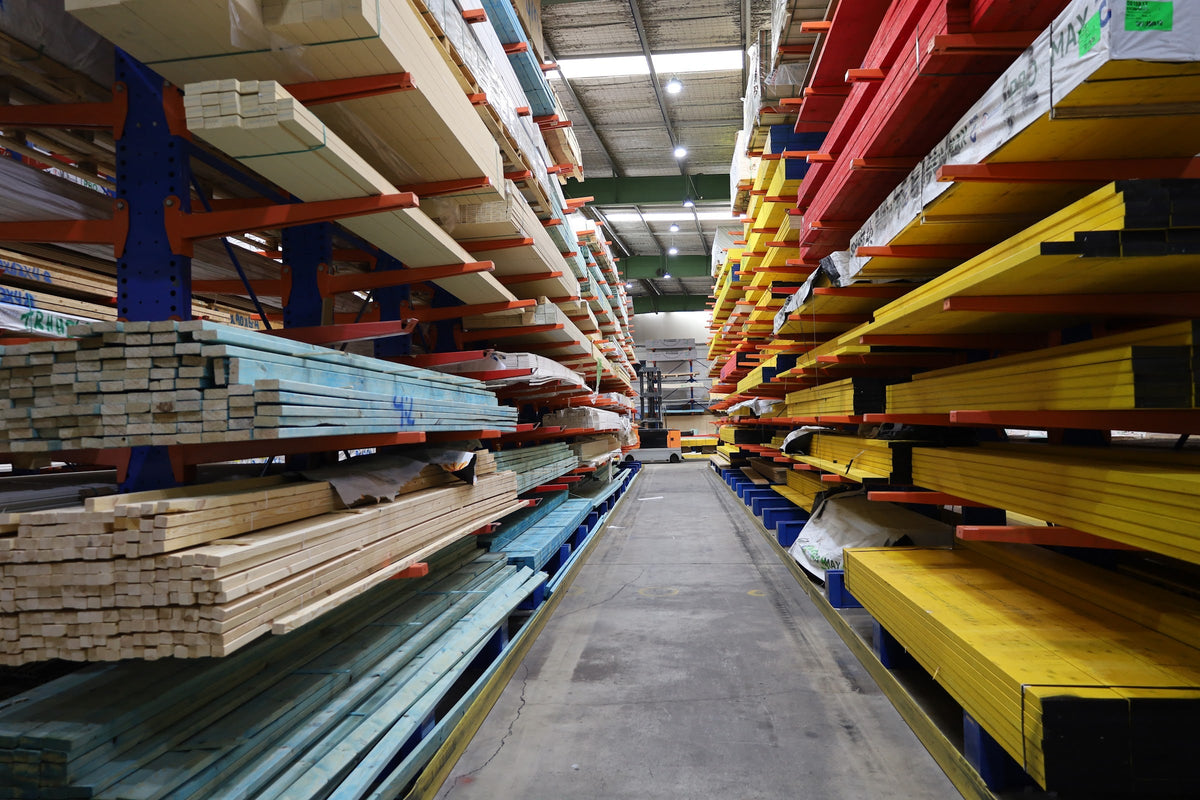
Walk into any timber yard and you'll see pine marked H2, H3 or H4. That H number is the single most important thing printed on the stick. Pick the wrong one and a deck joist or fence post can rot or get eaten years early. Pick the right one and it lasts as long as it should.
Short answer: inside and dry, use H2. Outside but off the ground, use H3. In the ground, use H4, and for in-ground structural posts that hold a building up, step up to H5 or a durable hardwood.
Key takeaways
- ✔ The H class comes from the Australian and New Zealand preservation standard, AS/NZS 1604. There are six classes, H1 to H6.
- ✔ Each class covers every use below it. H3 can go inside; H2 cannot go outside.
- ✔ Blue H2F framing is only for use south of the Tropic of Capricorn, which takes in all of NSW.
- ✔ If any part of a post goes into soil, it needs H4 or higher.
- ✔ Your plans or engineer have the final say. Read the treatment on the drawings before you order.
What the H number actually means
The H stands for hazard. As the hazard rises from H1 to H6, the standard asks for more preservative, pushed deeper into the wood. H1 covers borers only. H2 adds termites. H3 adds moderate decay from wetting. H4 and H5 cover ground contact, where decay is severe. H6 is for marine borers in sea water.
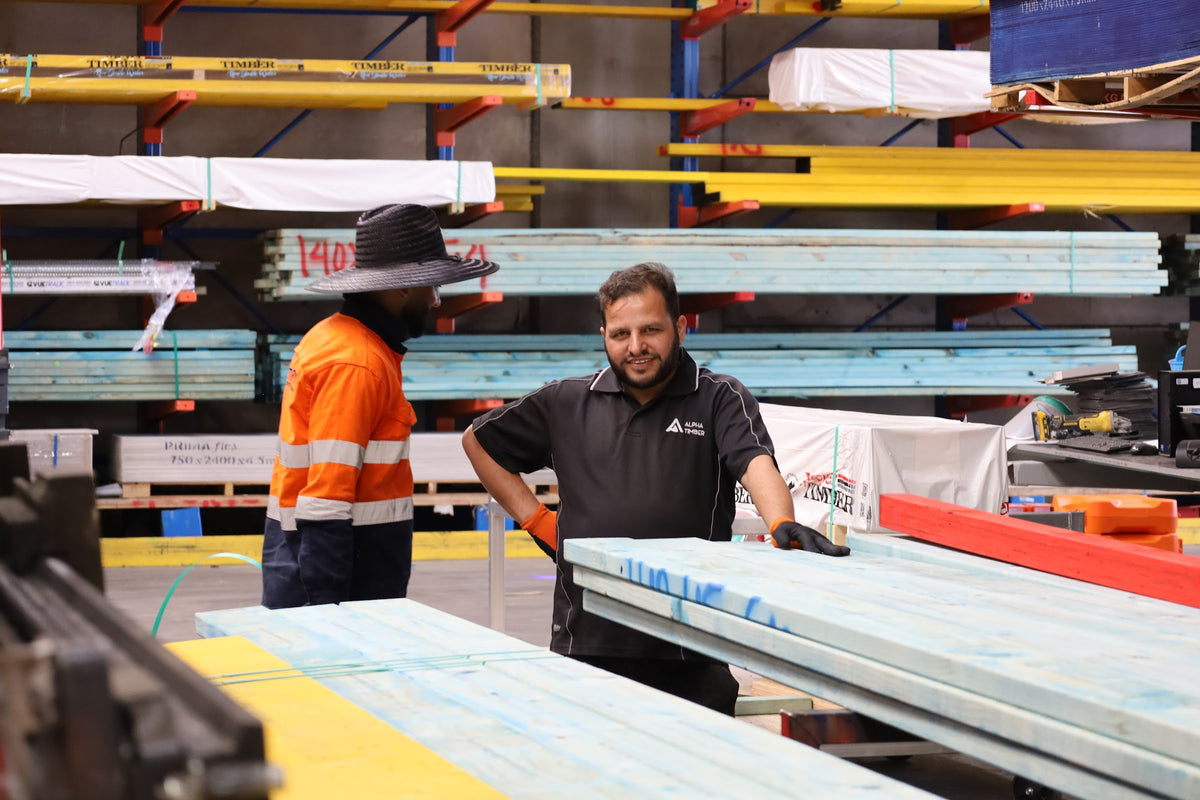
The treater brands each piece with its class, so the H number on the timber is your proof of what it was treated for. No brand, no proof.
H2: house framing, kept dry
H2 is treated against termites and borers for use inside the building, above ground and protected from the weather. That makes it the standard choice for wall frames, roof framing, noggins and plates on Sydney homes.
Most framing pine sold in NSW is H2F, often called blue pine. The F means it is envelope treated: the preservative forms a protective skin around the outside of the piece. H2F and H2S (used on LVL and plywood) are only approved south of the Tropic of Capricorn. Sydney is well inside that line.
Our H2 MGP10 framing range covers 70x35 through to 240x45, including pre-cut stud lengths for 90x45. Read how to order framing timber before you write your list.
H3: outdoors, above ground
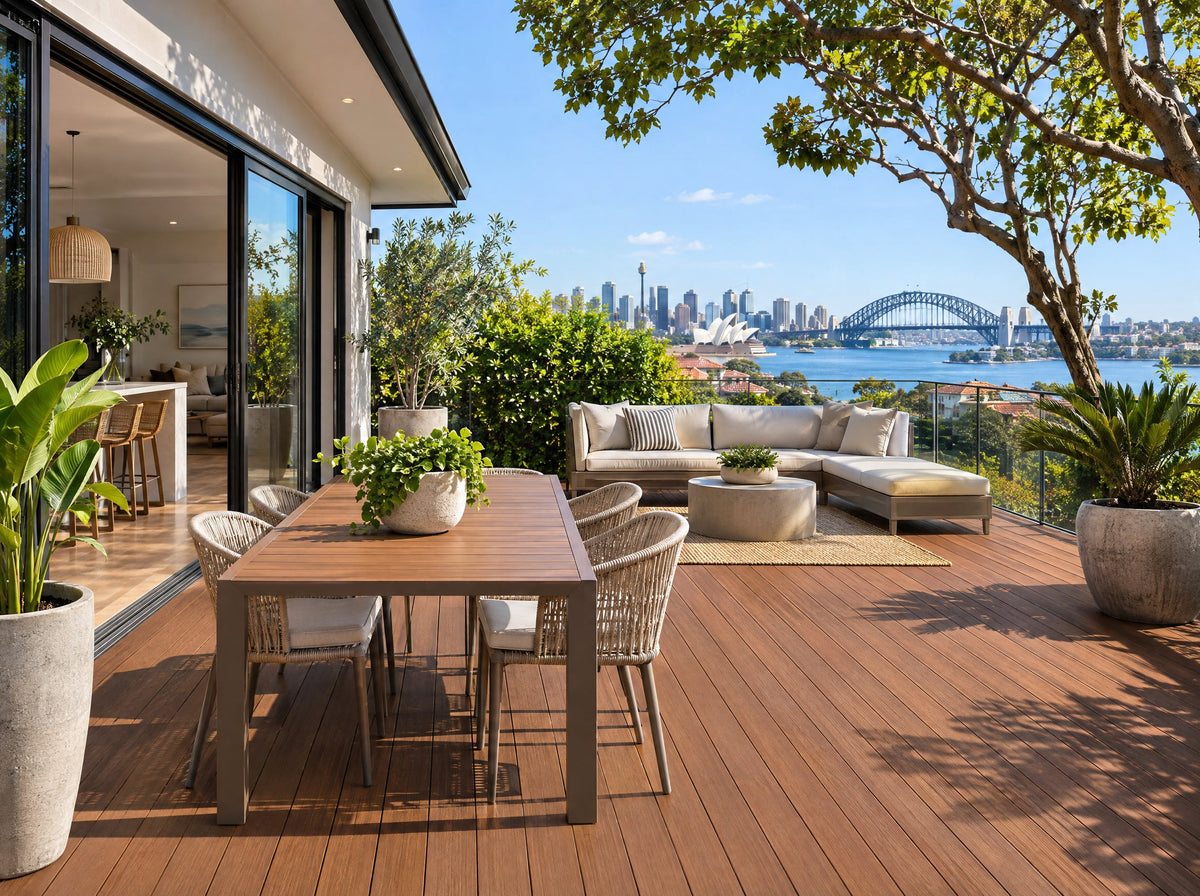
H3 is for timber that gets wet in the weather but can dry out again. Think pergola beams and rafters, deck joists and bearers kept clear of the ground, fascia, fence rails, palings and screening.
Height off the ground matters. WoodSolutions, the timber industry's technical body, advises stepping up to H4 or a Class 1 hardwood when timber sits close to the ground with less than about 400 mm of clearance, because it stays damp for longer.
Shop H3 treated pine from 70x35 to 290x45, or H3 primed timber for painted exterior work.

H4: in the ground
H4 is treated for in-ground contact, where timber stays damp: fence posts, garden edging, landscaping and retaining wall sleepers. If any part of the timber goes into soil, it needs H4 or higher.
One important line: WoodSolutions notes that H4 is not meant for critical structural members in the ground. A post that holds up a deck, carport or house is a structural element, so use H5 or a Class 1 durable hardwood unless your engineer says otherwise.
We stock H4 posts and sleepers, including 88x88 H4 DAR GL8 posts and 200x50 H4 sleepers.
Quick guide
| Class | Where it goes | Protects against | Typical jobs |
|---|---|---|---|
| H2 / H2F | Inside, above ground, dry | Borers and termites | Wall and roof framing, noggins, plates |
| H3 | Outside, above ground | Moderate decay, borers, termites | Pergolas, deck joists, fascia, fence rails, screening |
| H4 | In the ground, non-critical | Severe decay, borers, termites | Fence posts, garden edging, landscape sleepers |
| H5 | In the ground, structural or very wet | Very severe decay | House stumps, structural posts, retaining walls (as designed) |
| H6 | Marine | Marine borers | Jetties and wharves in sea water |
Checklist before you order
- Read the treatment on your plans or engineering. If it says H3, don't drop to H2 to save a few dollars.
- Ask: will any part touch the ground, or sit within about 400 mm of it? If yes, go up a class.
- Check the brand on each piece when it arrives. It shows the class.
- Plan your cuts. Envelope-treated framing (H2F) has its protection in the outer layer, so keep cuts and notches to what the frame needs, and ask us what to brush onto cut ends of outdoor timber.
- Use fixings that suit treated timber outdoors: hot dip galvanised or stainless steel.
Frequently asked questions
Can I use H3 inside?
Yes. Each class covers the uses below it, so H3 can go anywhere H2 can. It usually costs more, so most builders keep H3 for outside.
Can I use H2 for a pergola if I paint it?
No. Paint is not treatment. Outdoor timber exposed to the weather needs H3 or better.
Why is some framing blue?
Blue is a tint added with the H2F envelope treatment so it is easy to spot on site. The colour itself is not the protection; the brand is.
Is H4 fine for deck stumps?
Stumps that carry the deck are structural. Follow your plans. Where they don't say, the industry guidance is H5 or a Class 1 hardwood for in-ground structural posts.
Not sure? Ask the yard
Every job is different, and your plans or engineer may set a grade or treatment. Send us your cut list and we'll match the right timber to each part of the job. Request a quote or call 02 4605 0215. Building a deck? Read composite vs merbau vs treated pine decking costs next.
General information as at November 2026. Your plans, engineer and certifier set the requirements for your job.
Sources: Timber Preservers Association of Australia, AS/NZS 1604 explained; WoodSolutions, preservative treatments and use classes; NSW EPA, treated timber chart.